“Hanggang sa dulo ng ating walang hanggan Hanggang ang puso’y wala ng nararamdaman Kahit matapos ang magpakailan pa man Ako’y maghihintay sa ngalan ng pag-ibig” for me this line it talks about myself that no matter what happen I always love the person even if he always broke my heart, I always will wait for him and love him for the rest of my life.
Lyrics
Hanggang kailan ako maghihintay na para bang wala ng papalit sayo? Nasan ka man Sigaw ng puso ko’y ikaw hanggang ngayonKung sana lamang ay nakita mo ang lungkot sa’yong ngiti Isang umagang ‘di ka nagbalik Gumising ka at ng makita mo Ang tamis ng sandali ng kahapong ‘di magbabalikHanggang sa dulo ng ating walang hanggan Hanggang ang puso’y wala ng nararamdaman Kahit matapos ang magpakailan pa man Ako’y maghihintay sa ngalan ng pag-ibigHanggang kailan ako maghihintay na para bang walang iba sa piling mo? Nasan ka man Sigaw ng puso ko ay ang pangalan moKung sana lamang ay nakita mo ang lungkot sa’yong ngiti Isang umagang ‘di ka nagbalik Gumising ka at ng makita mo Ang tamis ng sandali ng kahapong ‘di magbabalikHanggang sa dulo ng ating walang hanggan Hanggang ang puso’y wala ng nararamdaman Kahit matapos ang magpakailan pa man Ako’y maghihintay sa ngalan ng pag-ibigHanggang kailan pa ba magtitiis? Nalunod na sa kaiisip Huling kapiling ka’y sa aking panaginip Ikaw mula noon Ikaw hanggang ngayonHanggang sa dulo ng ating walang hanggan Hanggang ang puso’y wala ng maramdamanHanggang sa dulo ng ating walang hanggan Hanggang ang puso’y wala nang nararamdaman Kahit matapos ang magpakailan pa man Ako’y maghihintay sa ngalan ng pag-ibigHanggang sa dulo ng ating walang hanggan Hanggang ang puso’y wala nang nararamdaman Kahit matapos ang magpakailan pa man Ako’y maghihintay sa ngalan ng pag-ibig mo
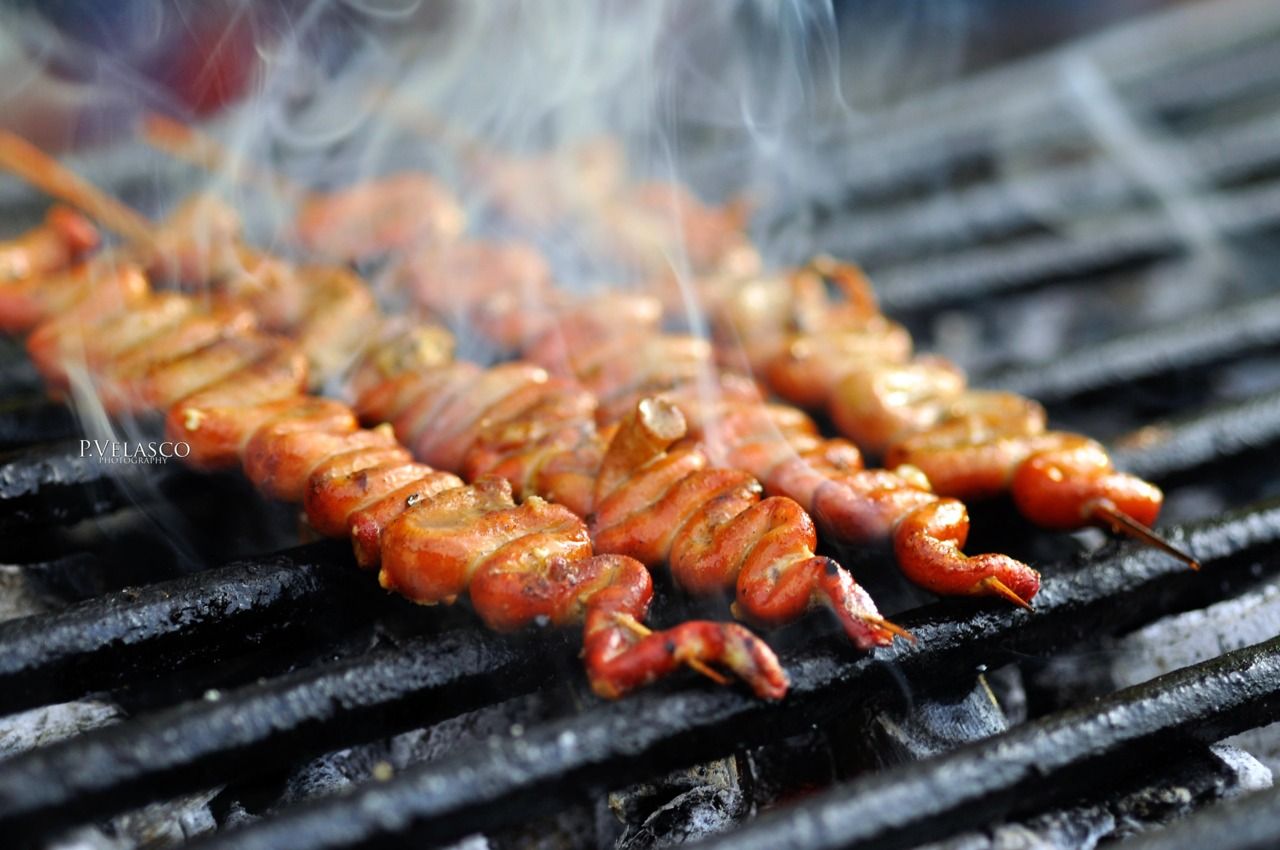
Isaw is a street food from the Philippines, made from barbecued pig or chicken intestines. The intestines are cleaned, turned inside out, and cleaned again, repeating the process several times; they are then either boiled, then grilled, or immediately grilled on sticks. They are usually dipped in vinegar or sukang pinakurat (vinegar with onions, peppers, and other spices). They are usually sold by vendors on street corners during the afternoons. (5 pesos per skewer)
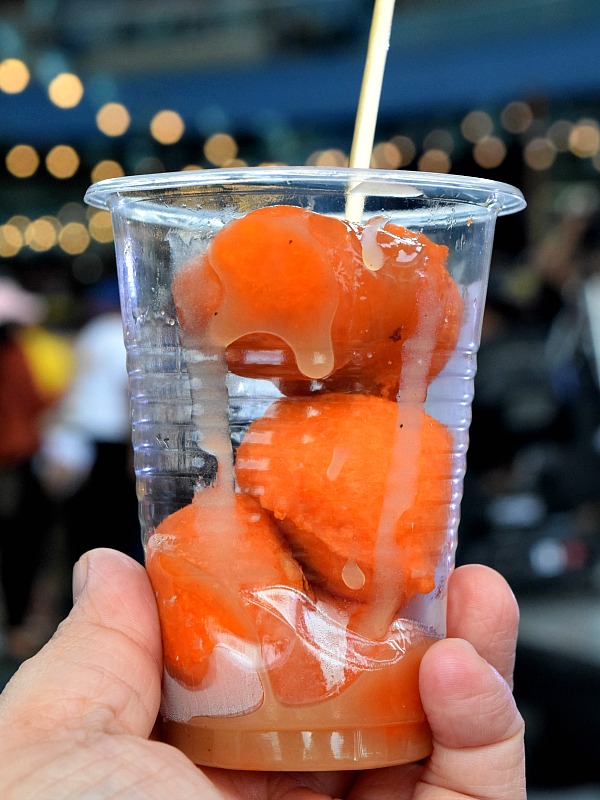
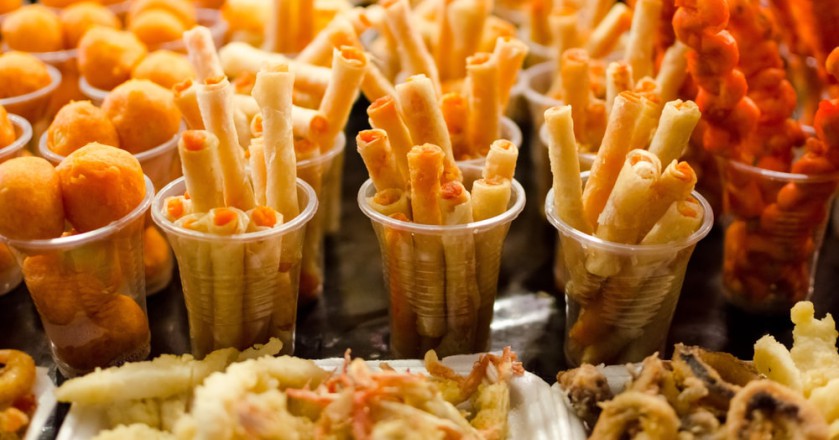
Kwek-Kwekis a famous Filipino street food made by deep-frying hard-boiled quail eggs that are covered with orange batter. This is usually served with a spiced vinegar-based dip and chopped cucumber on the side. Another street food similar to this is called Tokneneng which uses chicken or duck eggs instead. (15 pesos per cup)
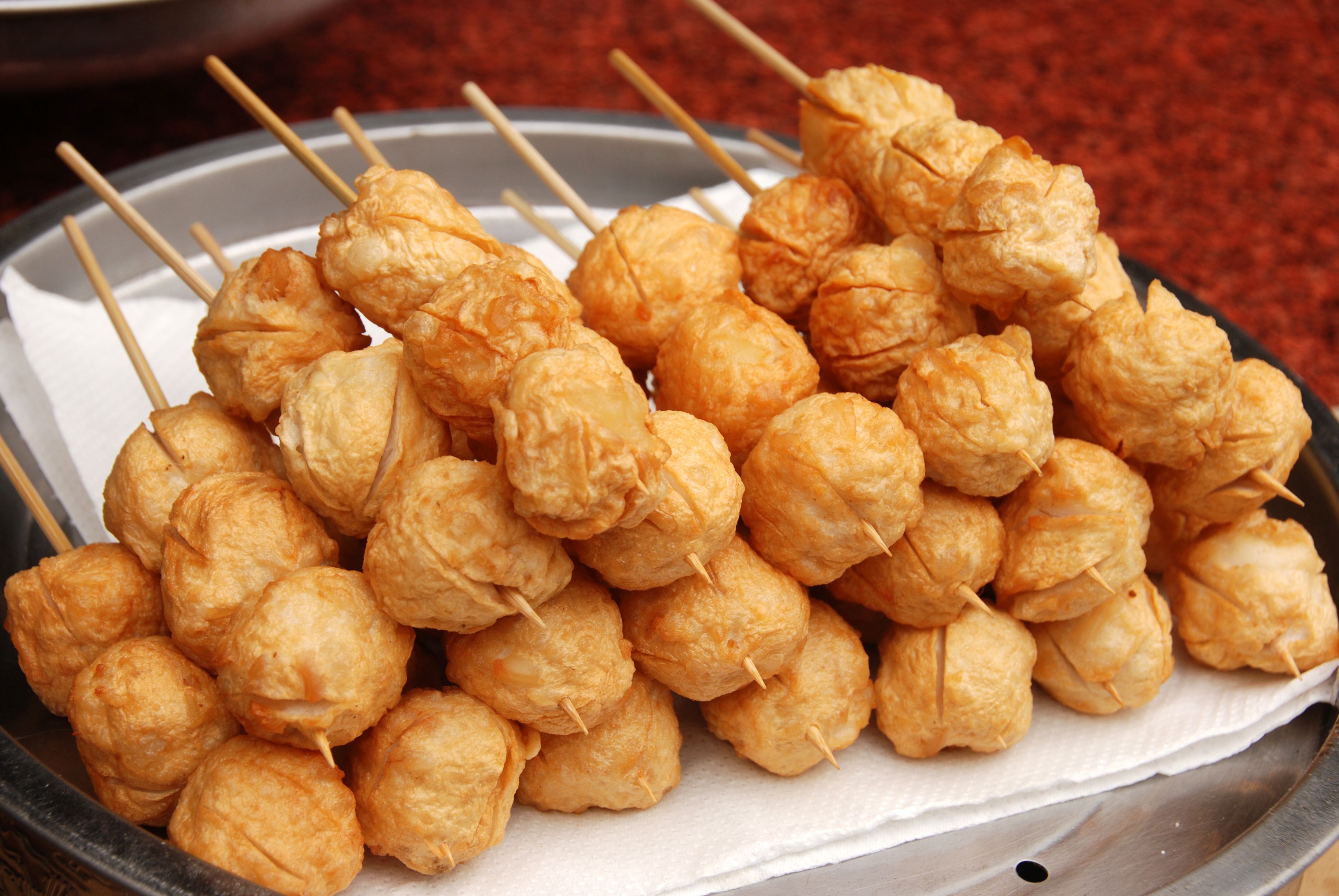
Fish ball is very popular street food snack that is best served with a sweet and spicy sauce. Basic ingredients for making fish ball are fish meat mixed with chopped vegetables, spices, beaten eggs and cornstarch. Fish ball offered with three kinds of dipping sauces: spicy (white/orange coloured) – vinegar, water, diced onions and garlic; sweet (brown gravy coloured) – corn starch, banana ketchup, sugar and salt; and sweet/sour (amber or deeper orange coloured) – the sweet variety with lots of small hot chilis added. (10 pesos per skewer)
Bukois the name for young coconuts. Although there are a near endless amount of ways to use a coconut in cooking, one of the best and simplest is to just slice it open and drink the water and eat the young coconut meat. (5/10 pesos per cup)
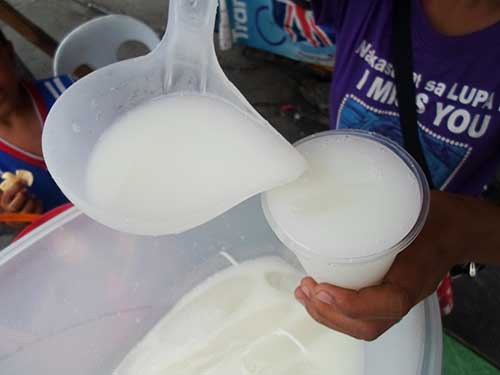
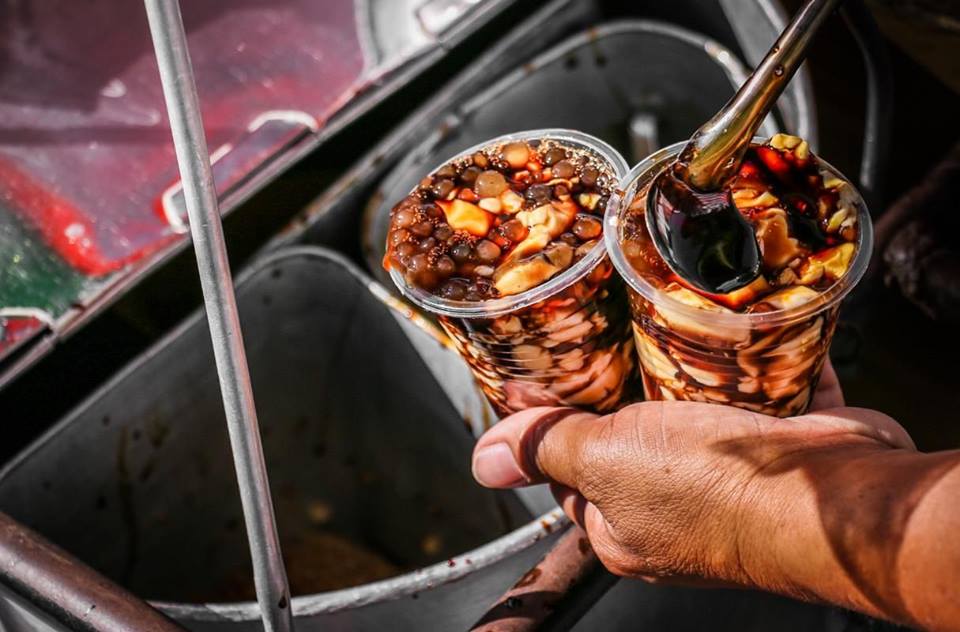
Taho is one of the best snack foods in the Philippines. Decades have passed, but the craving for this food has not vanished in our culture and still has been enjoyed by every “Juan”. This signature snack food can be found all over the country. Taho is not only good for our health, but is budget-friendly too. With just five pesos, you can enjoy the sweetness, tastiness, and its exquisite flavor. The word taho is derived from a Chinese word douhua or tofu pudding in English. This delicious food consists of balatong (Softened tofu), arnibal (Caramelized sugar with vanilla) and sago (pearl tapioca). The combination of these ingredients would want you asking for more. (starts at 5 pesos per cup)
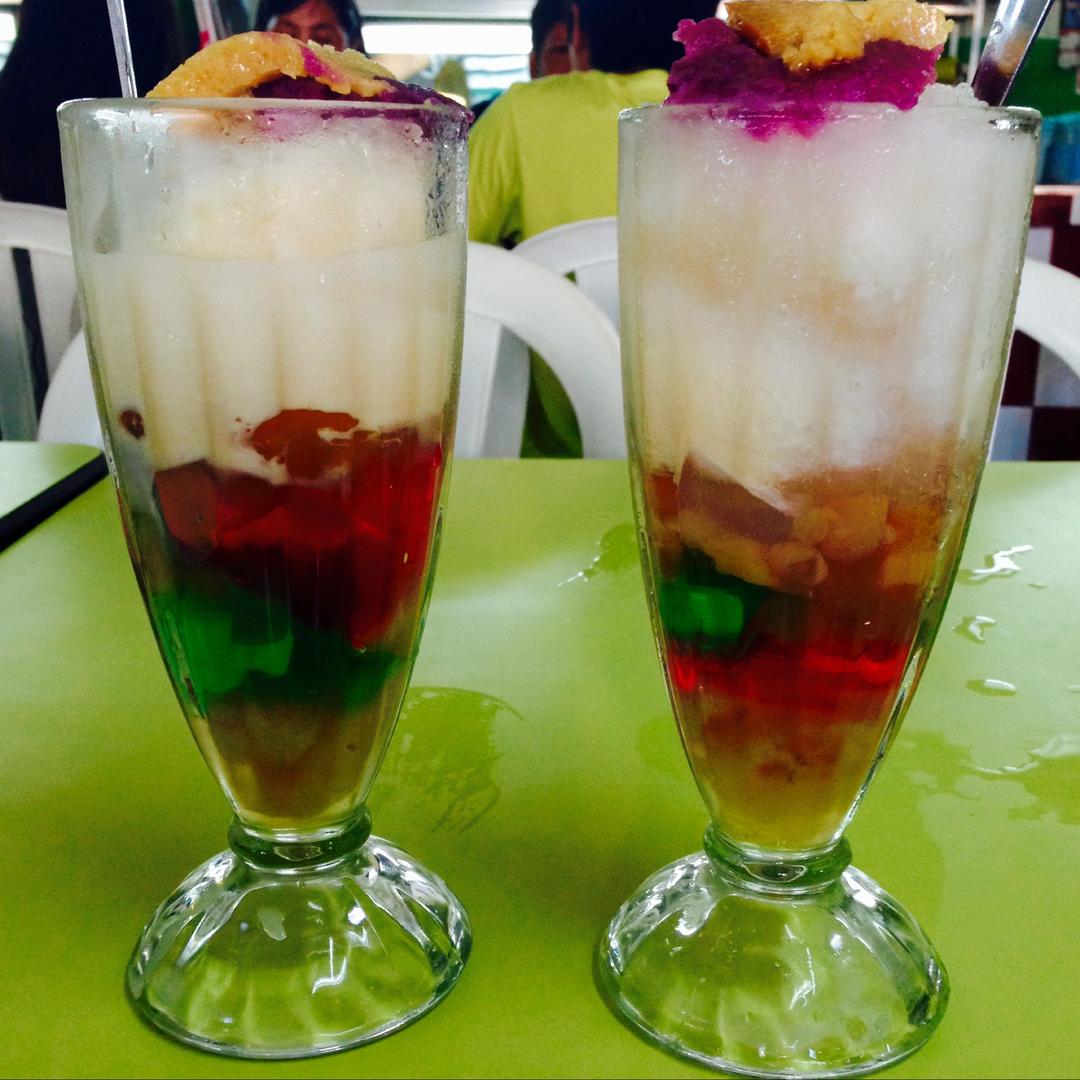
Halo-halo (“assorted”) is a popular Filipino cold dessert which is a concoction of crushed ice, evaporated milk and various ingredients including, among others, sweetenedbeans, coconut julienes, sago, gulaman (seaweed gelatin), pinipig rice, boiled root crops in cubes, fruit slices, flan, and topped with a scoop of ice cream. (25 pesos per halo-halo cup)
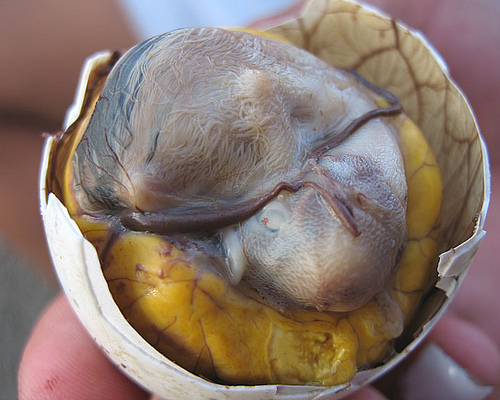
Balut is a developing bird embryo that is boiled and eaten from the shell. It originated from and is commonly sold as street food in the Philippines. Often served with beer, balut is popular in Southeast Asian countries, such as Laos, Cambodia, Thailand and Vietnam. The Tagalog and Malay word balot means “wrapped”. In order to eat balut you crack a small hole at the top of the shell, and first drink out the chicken soup. You can then peel the rest of the egg, season with salt and vinegar, and eat the embryo and yolk. (18 pesos per egg)
WHERE TO FIND THE BEST STREET FOODS?
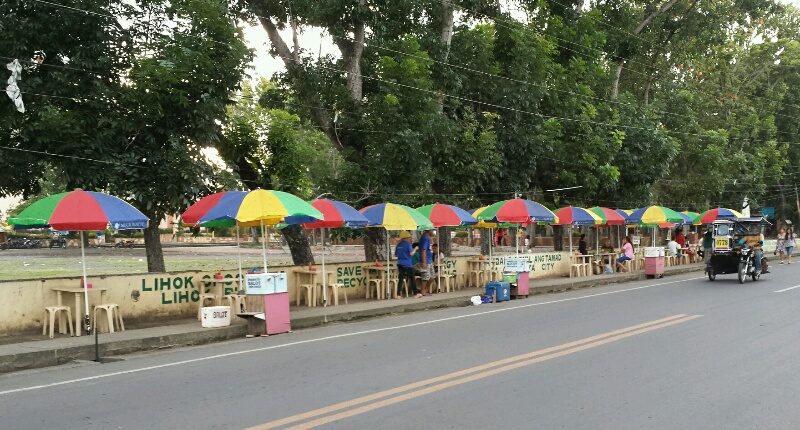
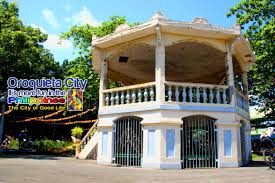
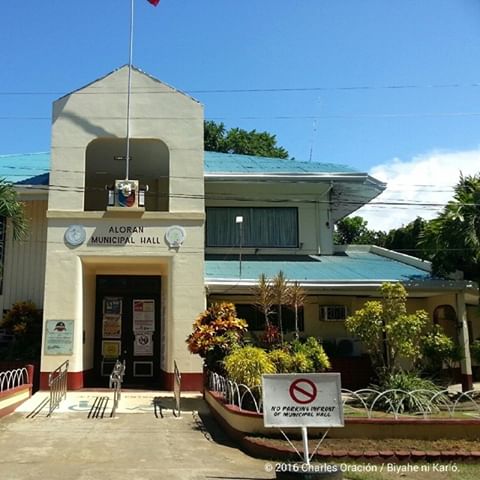
You’ll find street food snacks all over the Philippines, and in Mindanao, you can’t walk more than a few meters in many areas of town without seeing something being served. You do have to choose wisely the street food you decide to eat. The best places to eat street food in my place, is in Aloran and Oroquieta City.
Hello everyone, wI’m Key Cy Fabroa Cabahug a 18 years old street food blogger. I live in Lumbayao, Aloran, Mis. Occ. I live with my father named Penuel Rey Ycong Cabahug. My mother’s name is Maricel Polinar Fabroa and my sisters’s name is Marielle Jane Fabroa Cabahug. I started to make a blog about street foods since I was 17 years old because I was broken and I try to commit suicide but God gave me a sign that I should still live and I start my journey to Street Food Blogs. I thank God for giving me a sign to live and to taste the delicious street food of Filipino made. Now I’m telling you all that if you have problems in life just pray to our God and try something new and try the delicious street foods of the Fipilinos.
This is Key Cy Fabroa Cabahug the food street blogger now signing off…
One of my passions is street food, where you get an authentic taste of a culture. I’m excited to bring to you a new column about street food around the world. Similar to our Street Food restaurants in Mindanao, where we have food from countries all over the world, I will be writing weekly about global Street Food.

 One of my passions is street food, where you get an authentic taste of a culture. I’m excited to bring to you a new column about street food around the world. Similar to our Street Food restaurants in Mindanao, where we have food from countries all over the world, I will be writing weekly about global Street Food.
 Ken's Food Blog